In his uplifting opening welcome to the Thomas More Centre’s recent Christianity and the Common Good Conference (reported by the Ukrainian Eparchy), the Ukrainian Cardinal Mykola Bychok underlined the importance of founding our discussion about the common good in liturgical prayer and focus. The Cardinal said:
“Your first theme today – ‘Prayer and Liturgy as the Foundation of the Common Good’ – goes to the heart of the Church’s mission. Before we speak of policies, structures, or social strategies, we must speak of prayer. Before we attempt to build a just society, we must allow God to build within us a just heart.”
(For those who participated at the TMC conference and have not yet done so, please share your thoughts, ideas and feedback here.)
All of us will have been confronted at some stage by the typical functional secular response to the place of prayer and worship, endemic to the secular West over the last 300 years: that prayer is a private indulgence, a superfluous frill to the work of life, or worse, a sign of an immature psychological dependency – detrimental to any political or social engagement.
In 2004, the German Frankfurt-school sociologist Jürgen Habermas and soon-to-be-Pope Benedict XVI Cardinal Joseph Ratzinger, took part in a surprising and influential discussion in which they agreed – despite their vastly different presumptions – that a functional democratic state could not continue without the moral and spiritual contributions of religion. Their dialogue was reprinted in the book, The Dialectics of Secularization: On Reason and Religion (Ignatius 2006).
In this dialogue, both Habermas and Benedict XVI prefigure the emergence of a “post-secular” era or of “post-secularity”. What they and other writers mean by this is that the rationalist assumptions of radical “secularisation as progress” are unsustainable and destructive. The assumptions that dominated the Enlightenment revolution, which fed the catastrophic totalitarian instantiations of the “elimination of religion” (by murderous force if necessary), are found to be implosive for both humanity and public cohesion.
Cardinal Bychok’s words at the recent conference insisted on the importance of Christian prayer and practice in the shared task of the building up and defending of the common good:
“In a world that often measures value by productivity, efficiency, or influence, prayer appears unproductive. Yet it is precisely in prayer that the human person becomes capable of love, capable of truth, capable of the patience and courage that social renewal requires.
“The liturgy, above all, forms us for the Common Good. In the Divine Liturgy we learn to stand together – not as isolated individuals, but as a people. We learn to listen, to repent, to forgive, to intercede for one another. We learn to receive, not to grasp. We learn that our lives are not our own, but gifts entrusted to us for the sake of others.”
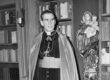
The Cardinal’s words were important and reminded us of the earlier words of Fr Peter Knowles OP (1927-2008). March 11 this year marks the 18th anniversary of his death.
Fr Knowles was a uniquely memorable priest and scholar. He served as a chaplain to Mannix College in Monash, he served the Russian Catholic community in Melbourne and supported the Ukrainian Catholic Church. He became a spiritual guide and friend to many diverse people but also at the early Thomas More Centre Summer Schools.
I recalled the importance of Fr Knowles two years ago in this newsletter.
Fr Peter Knowles increasingly lived out his life in a scholarly, liturgically focussed and monastic way in his small and book-crammed flat at the Russian Catholic Centre in Kew.
Fr Knowles collaborated in a close way with the Australian Byzantine scholar and teacher Dr Andrew Quinlan, now based in Lviv in war-torn Ukraine. The resonance of Dr Quinlan’s thoughts, Fr Knowles’ and the Cardinal’s can be found in a lively 2025 TMC interview hosted by TMC Queensland organiser Mark Makowiecki.
In the March 2001 edition of AD2000, Fr Peter wrote of the importance of monasteries and their cycle of liturgical prayer, while he was pursuing a new monastic chapter in his life when he moved to the Byzantine Monastery of the Holy Resurrection in Newberry Springs in California.
In this article, Fr Knowles argued of the crucial role of monasticism in the life of the Church:
“The monastic way is a living of prayer as forged by the doctrine and directions of the Church. It is as a concentrated image of the life of the Church that monastic life finds its meaning.”
Fr Knowles wrote of the importance of liturgical prayer and practice in the life of the monastery for the Church and for the world:
“On the contrary, one whose daily round is intentionally interwoven with the lengthy services of the Church appreciates increasingly thereby that the liturgy is the noblest expression of the Church’s theology; he becomes more and more habituated to a divinely cast world.
Indeed, by his very withdrawal from external busyness, the monastic gains a sharper understanding of humanity. Involvement constantly with the divine, makes him more sensitively human.”
Without prayer and liturgy, our allegiances ping-pong between political poles or, as Fr Knowles warned:
“We see it in the erosion of human dignity, in the loneliness that afflicts so many, in the temptation to seek salvation in political figures or ideologies. When prayer disappears, false messiahs multiply.”
Humbling and timely thoughts for this third week of Lent.
Anna Krohn
Executive Director
Thomas More Centre