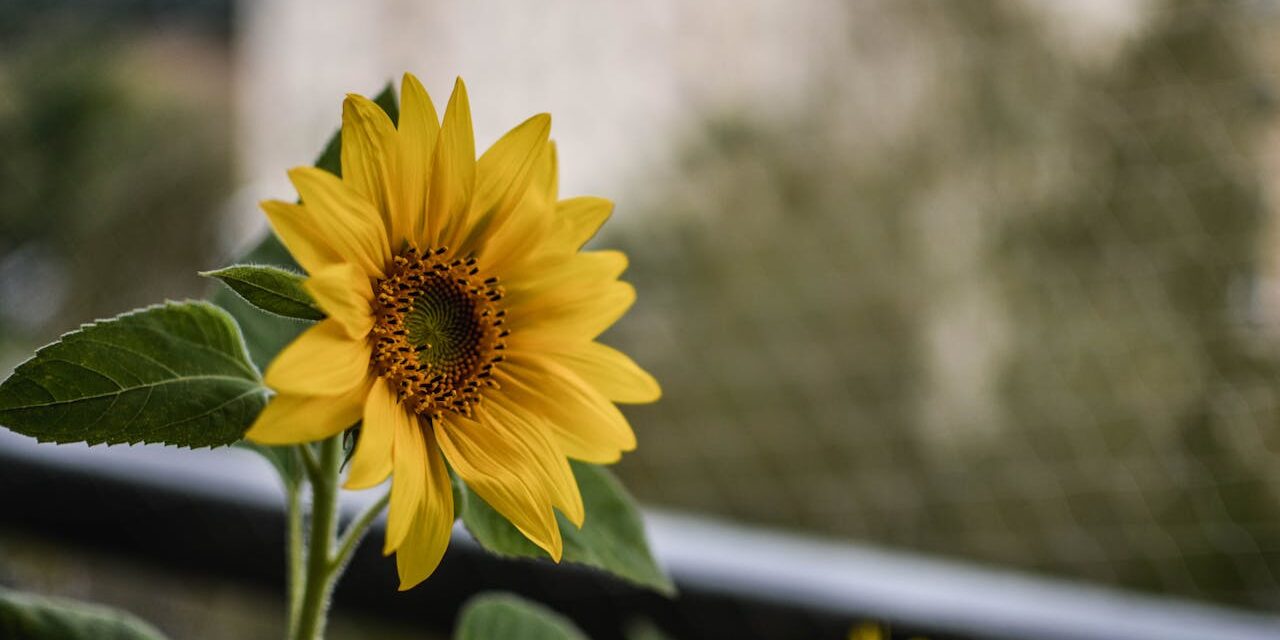
One of the most evocative words in the English language is the word “flourishing”. It is a word that provokes a wide range of poetic, personal and theological truths.
The English word itself derives from the Old French word florir, which means to flower or to be full of life and healthy growth. There is an obvious link to the classical Latin infinitive florere – “to flower”.
This commonsense English botanical term taken from the Latin root becomes a metaphor and a more lively and vivid one than is perhaps conveyed by the philosophical Greek term eudaimonia, which means something like “eu” (well or good) and “daimon” (spirit or being; guided by or attuned to a benevolent spirit).
This term was a basis for Aristotle’s philosophy of the good life, of true happiness and of the person possessing internally good character because of acting according to the good and the real. Eudaimonia has been an important guiding notion with various interpretations in Socratic, Platonic, Ciceronian and Christian traditions.
In our own time, a revival of this notion of human fulfillment has taken place in the work of a number of philosophers with an emphasis on the context of language, tradition and culture – most notably are star philosophers who were or became Catholics: Alasdair MacIntyre, G. E. M. Anscombe and Josef Pieper.
In recent years, Aristotle is in conversation with “positive psychology”. This approach diverges from the pathological suspicions of Freudian analysis and other early modern “deconstructions”, and builds empirical research on markers such as the development of character, resilience, purpose and the joy of working and making “in the flow”.
While these approaches can be integrated helpfully into lives of religious faith, it is worth considering how some younger people today are powerfully drawn to the transcendent, mystical and theological questions about “flourishing”.
St Thomas Aquinas (1225-1274) in his mighty Summa Theologica carries on something of this extension of “the Philosopher” Aristotle’s ideas about human thriving, character and actions; that is, those actions that are intentional, reasonable, freely chosen and virtuously acted upon.
Aquinas employs two related and distinct terms for developing his own integrated notion of “flourishing/happiness”. He distinguishes felicitas – meaning something that is genuinely human and satisfying in this life, and then beatitudo – those actions we chose in this life but are larger than life and that also flower in our final good, our eternal life in God.
Aquinas incorporates the universal (or natural law) sense of virtue and purpose with the workings of grace, our final end in the life of God and the flowering of flourishing in holiness, which is revealed in the Scriptures, in Christ and in the lives of saints.
One of the still memorable explanations of Aquinas’ important contributions about the human person was written in that time of ideological mayhem confusion: 1933.
The Map of Life was written then by the Sydney-born apologist, publisher and lay theologian Francis “Frank” Sheed.
Sheed explains that human beings “live in two worlds at once”, and when seeking for an understanding of “human flourishing”, we must recognise this at once. He writes:
“And, as has already been said, (Man) belongs to both worlds by his essence. He is not simply a spirit who is for the moment tied down to, or tied up in, a body. It is of his very nature to be a union of matter and spirit.”
The loss of any shared vision of human flourishing and the bitter divorce between the human and spiritual ends of fulfillment has created a polarisation between faith and order at one end, and reason and happiness on the other.
Sheed warns in The Map of Life that unless we have a clear “anthropology” or vision of the origins, nature and purpose of the human purpose, “we cannot use ourselves aright nor help any other man till we know what man is for: we can meddle with him, tinker with him, mean well to him, but save in a limited way we cannot help him”.
At the recent TMC conference, Christianity and the Common Good, Fr Jerome Santamaria potted much of Aquinas’ and Sheed’s wisdom for the participants but gave it new life with an iconographic overview:
“To paraphrase St Irenaeus: a flourishing humanity will be an icon of God, and humanity flourishes when it focuses on God.”
Linking our discussion of the “common good”, Fr Santamaria said in his talk: “We need an idea of what human flourishing is in order to understand what is common about this.”
This iconographic approach moves with and beyond “theory” – it proposes a beautiful, invitational and convincing vision of how human flourishing is revealed in the Biblical context; it re-casts the human longing for fulfillment through a divinely revealed lens.
Fr Santamaria pointed to the Biblical creation narratives as a revelation that present humanity as an icon of God, and of God’s creative work in creation’s and our own flourishing.
In a succinct and masterly presentation, Fr Santamaria explained how the Biblical account depicts human flourishing as only obtained by our steady gaze and reception of God’s harmonious palette in his iconography, and in our own invitation to co-create through incarnating.
The elements of the palette are “1) order, 2) life and 3) communion”, and these need to be complementary in the vital relationships of marriage, family and societies. Sin is as C.S. Lewis would say “the great divorce” and causes not iconography but idolatry.
Fr Santamaria noted that flourishing grows from the seeds of God’s Word and requires the balance of God’s logos:
“The implementation of God’s Word occurs through the complementary tasks of introducing order and life. Also, humanity images God as Creator through the union of male and female. Humanity is therefore ordered to God. God’s Word orders humanity. This becomes the nature of worship.”
Wishing you a flourishing of God’s Word in your lives this Lent.
Anna Krohn
Executive Director
Thomas More Centre