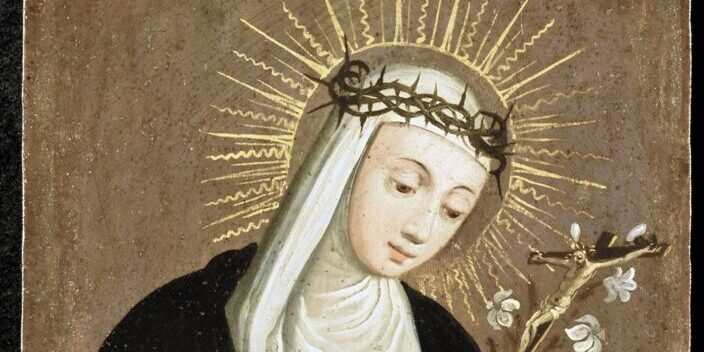
April 29 is the feast of St Catherine of Siena (1347-1380), the Tuscan spiritual powerhouse, mystic and laywoman whose life and teachings inspire much broader application to the work and mission of the Thomas More Centre today.
In 1970, Pope Paul VI – who promoted “new evangelisation” but was grieved by the fractures in the Catholic Church in the wake of the Church Council he had hoped would renew the Church – declared both Saints Catherine and Teresa of Ávila as the first women Doctors of the Church.
In many ways, St Catherine serves as a 14th-century forerunner of an authentic “communio” approach to both the renewal of Christian lay vocation and the urgent need to unify both societies and the Church herself.
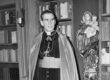
While she predates the communio movement by at least six centuries, Catherine was deeply appreciated and recognised by the three spearheading founders of the “communio theology” movement – Henri de Lubac, Hans Urs von Balthasar and Joseph Ratzinger/Pope Benedict XVI.
One important member of the communio movement, Fr Louis Bouyer, highlights many of the important aspects of Catherine’s teachings in his book Women Mystics. He points out that Catherine’s love of Christ and her holiness underpinned her original and rich wisdom:
“In Catherine of Siena the ancient patristic spirituality reappears in all its purity, lived with a laywoman’s boldness and a charity that becomes mission.”
He argued that she brought monastic culture and spirituality into the world and into engagement with the rough and tumble of the political struggles of her time.
Catherine both defended the papacy and Church teaching but roused reform in both.
In a papal audience series dedicated to the teaching power of Catholic holy women, Pope Benedict XVI says of St Catherine:
“She became the protagonist of an intense activity of spiritual guidance for people from every walk of life: nobles and politicians, artists and ordinary people, consecrated men and women and religious, including Pope Gregory XI who was living at Avignon in that period and whom she energetically and effectively urged to return to Rome.”
Communio theology insists that Christian life is not simply a “relationship with Jesus Christ” but an immersion in Christ’s life and His Sacrifice. St Catherine saw a Eucharistic and nuptial dimension to the Christian life, which prefigured the later movement of theology.
Her theology is Trinitarian, and she had a particular sense that the Holy Spirit worked in the lives of the baptised through holiness and particular gifts. She held an early sense of the “apostolate” of the baptised, and she herself as a result was an influence in the public life of her time.
Catherine’s numerous letters exhorted, advised, taught and encouraged people of all walks of life, driven by a fiery charity and Dominican eye for the truth, particularly the importance of seeing oneself with utter humility and honesty.
She encouraged lay people to follow the life of virtue, liturgical prayer and holiness that St Thomas Aquinas taught. She did not see that contemplation, study or culture should be divided into watertight compartments or particular specialities.
The formation of the Christian person is always in communio for St Catherine because it is always in Christ. Every person has their own mind, heart and soul to tender – each as a “little vineyard” to cultivate, and that this labour contributes to the flourishing of the whole Church.
New Book Warmly Received
On April 23, the Thomas More Centre in Melbourne organised the launch of Professor Tracey Rowland’s latest booktitled, Introducing Communio Theology. The book was published by Bishop Robert Barron’s Word on Fire Academic, and the launch took place at St Peter’s Parish Centre in Toorak.
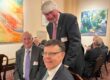
The evening was warmly received by over 40 guests and was run by the TMC in collaboration with St Peter’s Parish and Central Catholic Bookshop, the stockists of the book in Melbourne.
This type of collaboration itself illustrates the strength of working in “communion” with the gifts of other like-minded groups. In Australia, with its limited population, it makes practical sense. In a world divided into ever-growing fragmentation and “silos” of opinion, it serves as counter-cultural.
Professor Rowland had invited Alex Sidhu, the new director of the Christopher Dawson Centre for Cultural Studies, to speak to the importance of the communio movement.
Alex painted a large canvas to place the communio theology in the context of the Church’s history and to underline the importance of Professor Rowland’s motivation.
Later, Professor Rowland responded that the word communio refers to the journal Communio: International Catholic Review that is published in a dozen different language editions around the world. The journal was founded in 1972 by Henri de Lubac, Hans Urs von Balthasar and Joseph Ratzinger, who became Pope Benedict XVI. Balthasar was a student of de Lubac, and while Ratzinger was not a student of either man, he openly acknowledged his debt to their influence.
Professor Rowland explained that her book sought to synthesise the ideas of scholars who have contributed to the Communio journal over the past five decades. She added that it was written at a level that any educated Catholic should be able to follow and she especially hoped that it would be read by Generation Z Catholics.
At the conclusion of the talks, Anthony Krohn thanked Fr Dean, the speakers, the Central Catholic Bookshop and the TMC team, with special thanks to Anne-Maree Quinn and Gabriel Tipnis for their assistance.
He said: “The topic of communio is especially important in our times. It reminds us of the communion of saints but also of the universality of the Church. It is particularly important to heed the lively creative tension the communio scholars promoted between the ‘couplets’ of faith and reason, tradition and scripture, man and woman, body and soul, etc.”
Guests enthusiastically purchased copies of the book for signing and mingled with each other in discussion of the evening’s talks.
St Peter’s Parish, Toorak has become a centre for hosting a number of projects and events that capture the interface between Catholic teaching, music and art with its Lumen youth events and the Truth, Goodness and Beauty Project.
Thomas More Centre aims to stimulate lively conversation and formation in the foundations of Christian social teaching and key elements of Catholic life, thought and culture. The communio scholars and writers, especially as carefully explored in Professor Rowland’s recent book, greatly enhance this task.
Anna Krohn
Executive Director
Thomas More Centre
Featured image: St. Catherine of Siena, attributed to Plautilla Nelli. Uffizi Gallery, Florence. Image cropped. Licensed under CC BY-SA 4.0.