In an address to the United Nations in 2006 in New York at a commission entitled, “Measures to Eliminate International Terrorism”, the Vatican’s then Permanent Observer Monsignor Celestino Migliore argued that effective national and global counter-terrorism involves a delicate and principled series of strategies and responses. He said:
“Terrorism is a cultural manifestation – in the sense of being anti-culture and anti-civilisation – of warped perceptions of reality, of xenophobic complexes, of contempt for the other, of seeing the other as a threat, of cynical abuse of religion.”
Today, Monsignor Migliore is the Apostolic Nuncio to France (an office once held by Cardinal Roncalli, later Pope John XXIII, a great apostle of peace), but his words have a particular potency in this of all weeks, as so many families, the Jewish community and the country reel from the appalling and targeted shooting, killing and maiming at the Bondi Hanukkah celebrations.
The horror of terrorism is that it utterly violates the preciousness and dignity of human lives with premeditated intent. It only takes one or two people with murderous intention to carry out great harm.
Terrorism uses murderous violence on the innocent to inflict carnage, which itself breeds years of fear, outrage and trauma.
Terrorism is also, as Migliore suggests, a denial of the clarity of truth. It is based on “warped perceptions of reality”, which are founded on twisted notions of cultural and religious identity, resentment, hostility based on race or creed – ramped up to explosive force.
The hard-to-eradicate mind virus of “anti-Semitism” must once again be examined and challenged.
This distortion of the truth is being exploited in our time even after the horrific event, employing the silos of social media and falsified AI images.
There will be many questions about all sorts of issues about adequate intelligence, policing, radicalisation and other matters in the weeks and months to come.
As Pope Benedict XVI would insist many times, often to much misunderstanding, the divorce of the logos from religious faith leads to violence and civil disarray. Here in Melbourne, scholar and parish priest, Fr Jerome Santamaria, explains the Pope’s insights.
Pope Benedict spoke directly of the universal and personal implications of this: “Any authentic search for peace must begin with the realisation that the problem of truth and untruth is the concern of every man and woman; it is decisive for the peaceful future of our planet.”
The Bondi terrorism is particularly appalling because it struck not government policies, cultural expression or nationalism, but at children, Holocaust survivors and religious leaders who were attempting to share on the unlikely sand of Australian beach territory the joy of their faith in the God of truth and light.
It is remarkable that particular people on the ground in Bondi and from afar have been responding to the tragedy with heroic and effective humanity, despite the devastation left in the wake of the attacks.
The natural and transcendent principle of human dignity is the basis of a sound and realistic notion of “the common good” upon which any healing and rebuilding will depend.
Pope Benedict in his address above captured this: “Consequently, everyone should feel committed to service of this great good, and should strive to prevent any form of untruth from poisoning relationships. All people are members of one and the same family.”
2. Bringing home the principles of the common good
2.1 Wagga Day Conference – December 6
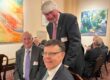
In stark contrast to the events of this week, we are left with a lasting and strong sense of hope and gratitude for everyone who assisted and attended the Wagga Day Conference on Saturday, December 6 at the Wagga Seminary.
There was the sense of a type of homecoming, as so many of our supporters in the area welcomed and encouraged us.
The theme of the day was taken from St John Henry Newman’s perception of emerging out of the shadows of doubt and isolation into the truth.
The day conference covered much territory and was available in two streams – one for a mixed adult audience and one for young people aged 14 and above.
Our speakers included: Patrick J. Byrne, Monica Doumit, and local Dominican Sisters Mary Martin, Mary Catherine and a paper from Sister Mary Augustine. The talks covered the importance of human dignity, legal challenges to our witness to the truth, truth in education, replacement of truth by ideology in institutions, and for the young people, navigating discernment between true and false friendships.
We also had an excellent video presentation on behalf of Aid to the Church in Need, which was prepared by the national director Bernard Toutounji.
Nearly 50 adults and 18 young people took part in the day conference, and many said that the positive encouragement and balance of the day left them with hope and enthusiasm. It was also a wonderful opportunity for us to catch up with so many friends.
The Conventual Sisters of St Dominic formed an incredibly energetic, good-humoured and welcoming team who really made this quickly organised day conference possible. Their contribution to the concept of the day, the program, the theme and the hard work of organising the day was immense.
Each of the sisters brought their own gifts to the running of the day: they presented talks; guided guests; ran safety checks and documentation; prepared the venue and fed the guests with blinding efficiency.
Great thanks to the seminary staff, especially the Rector Fr Bradley Rafter and the Dean of Studies Dr Matthew Tan, for their presence and warm interest and support.
Thanks to the TMC colleagues – the always capable and multi-tasking Gabriel Tipnis, and Nicole Yap who devised the beautiful posters for the day.
Thanks to the superior, Sister Mary Augustine, for her baking of many cakes for the afternoon tea – what a treat.
Special thanks to all who assisted in promoting the event and assisted on the day especially: the Reeves family, Damian and Sara Moore, and Andrew Garratt.
We look forward to more TMC events in 2026 and beyond.
2.2 Advent reflections: TMC YouTube interview with artist/poet Daniel Mitsui
Whatever hectic tasks you have this week in preparation for Christmas, tune into our fascinating interview with the Japanese-American poet and religious artist Daniel Mitsui, whose illuminations are some of the most meticulously striking we have come across. This is Mark’s second interview with Daniel – watch the first one here.
Anna Krohn
Executive Director
Thomas More Centre