1. The strong presence of mothers
The secular “festival” of Mother’s Day just celebrated can seem to be just another point in the cynical commercial annual calendar, designed to part sentimental consumers from their hard-earned money.
Despite the creation of the day in post-Civil War America, there is a more solid core to Mother’s Day that taps into an authentic human and theological recognition of life, feminine love and motherhood. The medieval strand of the celebration occurred on the 4th Sunday in Lent, and is still called in Ireland and Britain “Mothering Sunday”.
It was a holiday and a break from Lent, which enabled servants and farm labourers to travel home to their “mother church” – the church of their baptism and catechesis. At the same time, people “went a-mothering” visiting their mothers and grandmothers.
It was also an opportunity for the Church to celebrate the powerful intercession and protection of the Blessed Virgin Mary over all Christians.
The custom of honouring the Mother of Christ in May also has some distant resonance with the timing of the modern Mother’s Day. In the European Catholic world, the full flowering of spring baptised the old pagan Northern Hemisphere celebration of new life in the Earth with the new life born by the Virgin Mary in her mothering of Jesus Christ.
In 1965, Pope St Paul VI published a very short encyclical entitled, Mense Maio (The Month of May), which highlighted this devotion. Pope Paul urged all Christians to pray for the intercession of Mother Mary for the sake of peace in the Church and for all of humanity:
“May she who experienced the cares and hardships of earthly life, the weariness of daily toil, the hardships and trials of poverty, and the sorrows of Calvary, come to aid the needs of the Church and the human race. May she graciously lend an ear to the devout pleas of those all over the world who beg her for peace.”
2. “Healing mothers”
May is also a good month in which to remember three medical “spiritual mothers”, women who may not have been mothers in a biological sense but who through their loving attention, moral and intellectual gifts transformed the world of medicine.
These three women were pioneers in medicine and formed an unusual network of spiritual inspiration and encouragement across time and continents. Their names: the Scottish physician Dr Agnes McLaren (1837-1913), the Australian-born Dr Sister Mary Glowrey (1887-1957) and the Austrian Dr Mother Anna Maria Dengel (1892-1980).
Australians are discovering the remarkable Dr Sister Mary Glowrey.
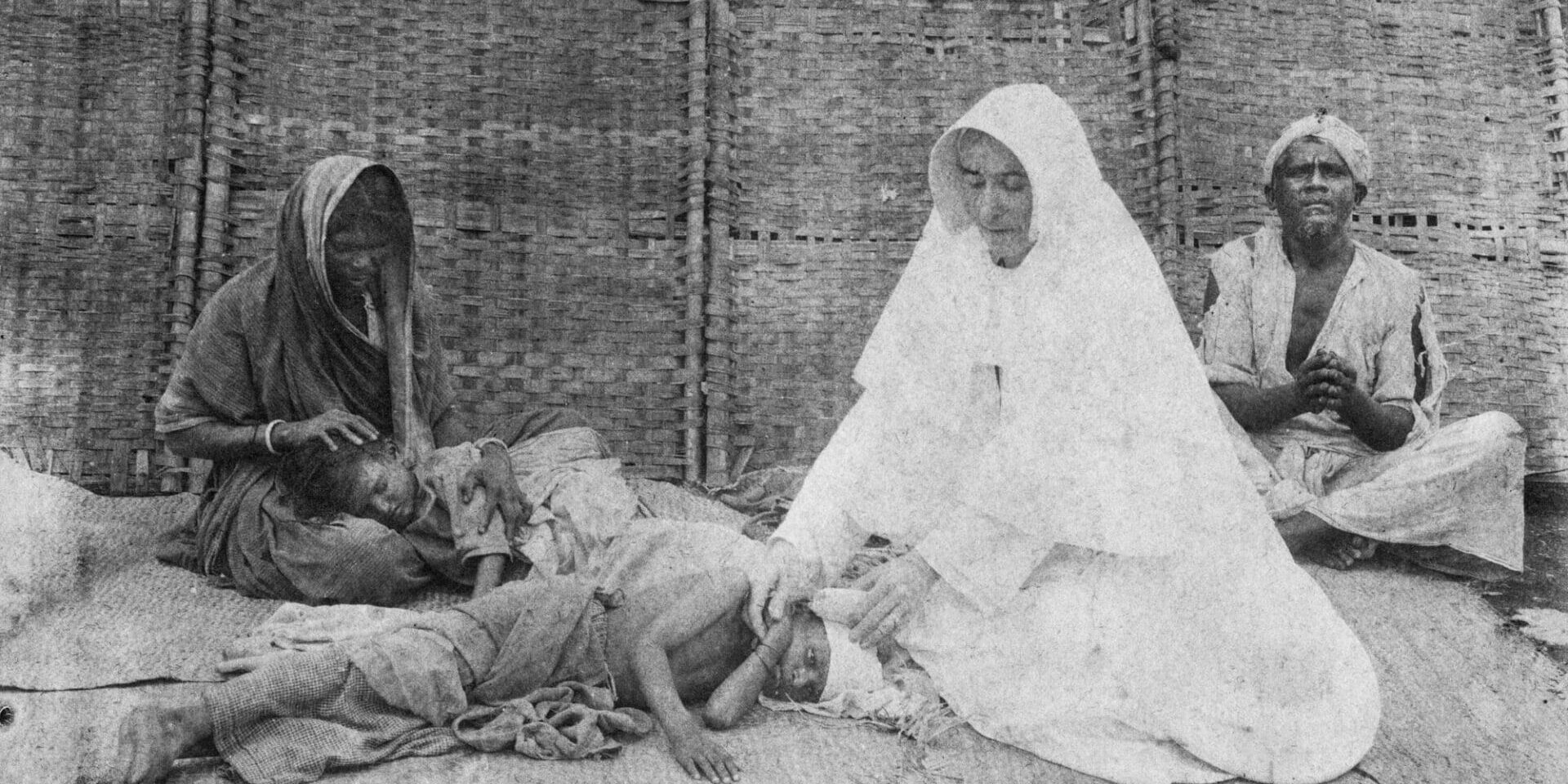
Dr Mary of the Sacred Heart JMJ, as she was consecrated, died 69 years ago on May 5 in Bangalore, India, having left her homeland in 1920 for medical missionary service. Her unassuming personality and intellectual talent were wrapped in a spiritual depth that combined educational, medical, organisational and missionary genius in her life of service.
Dr Mary was born into an Irish-Australian Catholic family in the western district of Victoria, Australia, and in November 2025 she was declared Venerable by Pope Leo XIV, the only other Australian so honoured since the canonisation of St Mary MacKillop.
In celebration of this ecclesial recognition, Sister Mary Karickakunnel JMJ – who worked in both Guntur (India) and Rome on the evidence for Dr Mary’s life of “heroic virtue” – has published a detailed biography, Venerable Mary Glowrey: Beacon of Hope Beyond Borders (St Paul’s India, 2026). Sr Mary Karickakunnel is now the Superior General of the Order of Jesus Mary and Joseph that the Australian Dr Mary joined.
The Indian sister writes in the recent biography that Dr Mary’s life “and mission uniquely bridge two distinct countries, Australia and India, leaving a lasting legacy of faith, service and compassion”.
Dr Mary was an outstanding physician, surgeon and specialist with her own practice. She was the first President of the Catholic Women’s Social Guild (which later became the Catholic Women’s League of Victoria and Wagga Wagga), and during her time in Victoria wrote and lectured on the preciousness of human life and on the practicalities of health and social conditions that affected women and children.
In 1920 she travelled to India to join the Dutch congregation in Guntur in the state of Andhra Pradesh. Dr Mary obtained the special papal approval of Benedict XV to become the first practising medical doctor and religious sister.
As a sister, she transformed a simple dispensary into St Joseph’s Hospital. During her 36 years in India she treated, sometimes single-handedly and against huge challenges, hundreds and thousands of patients from all castes and faiths.
She trained compounding pharmacists from the local Indian women, established education for nurses, researched alternative medical treatments, and devised methods of medical outpatient work.
She devised a network of Catholic hospital organisations, today called the Catholic Health Association of India (CHAI), India’s largest non-government healthcare network with the care of over 21 million people each year.
Dr Mary marked herself as an outstanding scholar at a very young age. Her father Edward first planted the idea of medical education in her. At the time, it was very rare for women to train as doctors either in Australia or anywhere else.
In 1915, having graduated in Medicine from Melbourne University (1910), Mary was seeking further precision in her medical vocation. She read a booklet about an earlier pioneer missionary doctor, Dr Agnes McLaren.
Dr Agnes was the daughter of a liberal Scottish father and Quaker mother, and she was drawn to the care of the poor, women, women’s suffrage and medicine over a generation earlier than Mary at a time when medical studies for women were banned in Britain.
Dr Agnes, then a Presbyterian, was encouraged by the reforming Cardinal Henry Edward Manning (1808-1892) to pursue her studies at the University of Montpellier in France, and graduated in 1879 and was registered at the Royal College of Physicians in Dublin.
At the age of 61, Agnes converted to Catholicism and later became a lay Dominican. She felt called to address the dire effects of caste and purdah in the neglect of women’s life and health in India. She established a hospital run by women in Rawalpindi (today in Pakistan) and tried to recruit religious sisters to train as doctors. The recent Glowrey biography notes that Dr Agnes’ “ideas were regarded as an audacious novelty” at the time.
For Dr Mary, it was as if Agnes’ aspirations called to her across time as a God-given call for her work in India.
Not only did Agnes make a powerful mark on Mary. A 1943 article by Sr Mary Angelica in the Linacre Quarterly notes that: “Dr McLaren’s last years on earth were spent in five journeys to Rome, begging and pleading with the Pope and Cardinals to allow Sisters to study medicine.”
In the year of Agnes’ death in 1913 France, another young woman born in the Austrian Tyrol, Anna Maria Dengel, felt a compelling vocational call to Agnes’ missionary and medical work.
By 1925, Mother Anna Dengel MD had founded the Society of Catholic Medical Missionaries in Washington, D.C. to carry on Agnes’ vision of female-led healthcare in Bengal, Rawalpindi and elsewhere.
In 1936, the Congregation for the Doctrine of the Faith issued a decree definitively opening the door for “sisters to study medicine and do obstetrical and all other medical work, but urges them to do so”.
While research into the work and writings of these three “healing mothers” continues, what is emerging is the fact that each woman shared the convictions that they serve as dedicated and consecrated feminine disciples of Christ the Physician. They saw not merely professional medical excellence and ambition – the “culture of life” combined both healing and the Gospel.
Dr Agnes said: “Medicine serves not only the healing of bodies but also the betterment of souls.”
Special thanks to these medical mothers this May!
Anna Krohn
Executive Director
Thomas More Centre
Featured image: Sr Mary of the Sacred Heart JMJ, Guntur, 1953. Photo courtesy of CWLVWW Inc.