The Thomas More Centre, since it was re-animated in 2023, has aimed to keep a collective ear to the ground.
That is, in part, why we have launched our online conversations and our Voices of the Movement oral history project. We are listening to recover our roots but also to find our bearings for our way ahead.
I remember my father sharing his experiences as a young stockman riding across the Northern Territory and Queensland. His fellow stockmen who were indigenous would lean to the ground to hear not only what was coming down the track but for things that had gone past. They could hear the mood of the mob and sense almost inaudible rumblings of gathering or retreating storms.
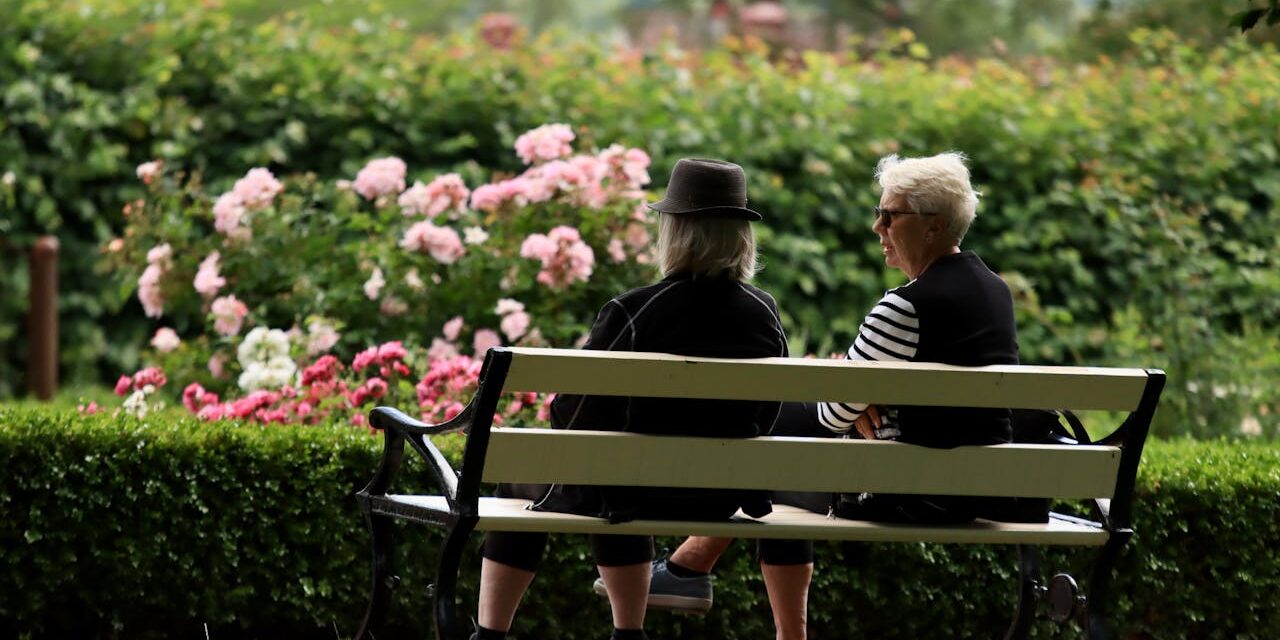
Today we need the wisdom of “deep listening”, which the Daly River people call “Dadirri” and which in other languages goes by other names. This listening does not entail sterile, bland and dumb “silence” but an active attentiveness and receptivity to nature, to reality and to another person.
There is a real discipline to listening and being attuned in our world erupting with clicks, memes, images and artificially generated worlds.
Deep listening to the “Word” of the Scriptures and of Christ as the “Word of God” is of course an ancient and perennial mode for all Christians.
It became a central theme which unified the various and brilliant members of the theological ressourcement movement in the Church in the 20th century – such priests/scholars as Henri de Lubac, Jean Daniélou, Hans Urs von Balthasar, Yves Congar, Marie-Dominique Chenu, Louis Bouyer and the younger scholar and future pope, Joseph Ratzinger.
In a real sense the Thomas More Centre is aiming for an intellectual and cultural ressourcement in our own land.
For many of the 20th-century “back to the sources” scholars, the Church was not only in the business of proclaiming, proposing, broadcasting and speaking but even more importantly listening for Christ in the midst of the pastoral, cultural and ethical chaos of their unchurched and bleeding times.
To listen more carefully, these typically French and German speakers studied not only Latin and Greek but Hebrew, Syriac and ancient liturgical languages. Although these theologians were mostly priests, they developed a deep interest and respect for the role of lay thinkers, leaders and saints. They often credited them for their own intellectual development.
They listened to history and with its currents other disciplines: iconography, pastoral theology, monasticism, liturgical history, literature, and above all, the Scriptures.
When he was Cardinal, Joseph Ratzinger wrote in The Nature and Mission of Theology that this kind of listening is not only informative – it is transformative: “Listening must be the medium of an encounter; this encounter is the condition of inner contact which leads to mutual comprehension. Reciprocal understanding, finally, deepens and transforms the being of the interlocutors.”
Such listening is not without discretion or good sense, but it is patient, respectful and realises that there is much to learn.
Thirty years ago this June 22nd marks the death at the age of 95 of one of the stars of the ressourcement movement, the Dominican Fr Yves Congar.
Congar was a champion of faith-attuned listening for the deeper voice of God: la connaissance de foi.
Yves Marie-Joseph Congar was born in 1904 in northeastern France. His life was changed by the experiences of his territory being occupied by Germany, and his study in Paris where one of his lecturers was the outstanding French philosopher Jacques Maritain (1882-1973).
In 1925 Yves joined the Order of Friars Preachers and was quickly drawn to the historical interests which were being revived at the Dominican studium at Le Saulchoir in Belgium. His historical approach to the thought of St Thomas Aquinas was influenced by the other great French philosopher Etienne Gilson (1884-1978). See here for a dive into five of Gilson’s great books.
Just before the Second World War, Congar had begun to stretch his wings as a teacher and to explore conversation with the Lutherans and the Orthodox, in order to advance both ecumenical listening and conversation.
With the outbreak of the war, Congar was enlisted as a military chaplain and was captured by German forces and imprisoned in the notorious “inescapable” German prison Colditz Castle, from which some made daring but failed escapes.
The hardships in Colditz, rather than dampening his theological interests, had fostered a deeper interest in Christian theological ecumenical solidarity; in the core and development of tradition; and in explaining why the “fideles” – the faithful – are vital to the life and work of the Church.
In this respect he seems to owe much to the thought of the English Cardinal John Henry Newman. Congar saw faith not only as the “content” of faith but also as a “filial” relationship – one that is open and receptive.
After the war, Congar concentrated on: the history of Catholic and Orthodox relations, After Nine Hundred Years; on the nature of the Holy Spirit, I Believe in the Holy Spirit (a large three-part work); on the nature of the Church and in exploring the role of the laity, Lay People in the Church; and many other texts.
Although all the baptised are framed and limited by their historical setting, they are also – like those living in monastic and priestly life – able to encounter “the Word of the Son” and also have their hearts made “sensitive to God’s Word” by the Holy Spirit.
For Congar the laity are not simply shadowy, weakly people who are somehow “less” holy than priests and religious. Their listening to the Word of Christ draws them to a priestly holiness and to a collaborative building-up of the Church, especially as witnesses of Christ in the world of family, society, industry, policy and nation-building.
Before the Council, Congar’s teaching was at first treated with suspicion, but Pope John XXIII appointed him a peritus and expert theologian during the Second Vatican Council.
As Bishop Robert Baron wrote of Fr Congar: “After a tumultuous intellectual career, during which he was, by turns, lionized, vilified, exiled and silenced, Congar found himself, at the age of 58, a peritus, or theological expert at the Second Vatican Council.”
As Bishop Baron describes it, the theological stars of the council divided into two opposing interpretative camps in the disorientating years after the council – Congar was aligned to the “liberal” Concilium magazine on one hand and Joseph Ratzinger worked to found the more continuous traditions of the Communio journal on the other.
Both theologians – along with the other theological giant, Pope John Paul II, who elevated the elderly friar to cardinal – have creatively and actively prompted lay people to be missionary deep listeners before God who mediate Christ’s love and transformative healing grace into the communities and relationships of the wider world.
For more, see the book Yves Congar by Aidan Nichols OP.
Anna Krohn
Executive Director
Thomas More Centre